3075290078
.jpg) 4169005786
4169005786North American Sustainable GW Scale Electricity
Both the United States and Canada started off the twentieth century as global leaders in hydroelectric production; but the two nations ended the century headed disparate directions. The U.S. hasn’t built a mega dam since the 1970s. Not only has the United States ceased building big power dams, but it is a leader in a growing dam removal movement.
“There is power out there,” said Adams. “But when data centers and other large users ask for a gigawatt, that’s not just sitting on the system. There’s power, but you can’t use contracted power. That’s why we have the situation we have now."
Without building more nuclear, it’s going to be difficult for any hyperscaler to purchase gigawatts of power for new data center buildouts. Given a multi-generational product roadmap for professional grade GPUs and accelerator variants, concerns are emerging about the environmental impact, the strain on power grids, and the rising utility costs associated with escalating energy demands. Large hydro electric projects are developed in collaboration with local communities and First Nations to identify ways to protect the environment and minimize potential negative consequences from altering habitats. Hydropower has numerous environmental advantages over fossil fuel power. They are renewable, don’t emit carbon, and provide enormous quantities of power whenever it is needed for the next 1,000 years.
According to Paul Churnock, Microsoft’s Principal Electrical Engineer of Datacenter Technical Governance and Strategy, the installation of millions of H100 GPUs will consume more energy than all households in Phoenix, Arizona by the end of 2024. Microsoft recently cited a near insatiable demand for power to meet its AI related data centre needs. Fundamentally, the accelerating adoption of AI/ML demands significantly more power and cooling than most existing data centers can currently provide. The increased energy consumption translates to higher greenhouse gas emissions, contributing to climate change and air pollution. Companies face increasing pressure to reduce their carbon footprint and adopt sustainable practices.
The cost of electricity is a major operational expense for data centers and other facilities that rely on these components. As energy demands rise, so will the cost of powering these facilities, potentially affecting profit margins and competitiveness. Open AI data centers running on 100% renewable power will lead to lower energy bills and reduced emissions. Considering the massive global power consumption and digital air pollution associated with cloud computing, especially in demanding applications like AI and high-performance computing, such reductions would translate into billions of dollars saved.
Currently, deploying a new Gen-AI data center can strain the existing power grid, potentially leading to insufficient power supply or negatively impacting other users on the network. To meet the growing demand, there is a need to either upgrade power generation and transmission infrastructure, potentially including nuclear power alongside renewable sources like solar and wind, or find ways to significantly reduce electricity consumption in data centers.
Open AI, already the world leader in Artificial Intelligence computing, now has the opportunity to become the world leader in sustainable AI computing. Not only will Open AI have the best-performing graphics hardware on the market, but by incorporating transformative technologies like LHPs, it can also achieve the highest energy efficiency. This unbeatable combination of performance and sustainability positions Nvidia at the forefront of the next generation of AI development.
Just as CPUs have largely been replaced by GPUs, renewable energy must be part of Open AI’s power mix. This shift is crucial to ensuring that future generations of supercomputers can meet the demands of data-intensive workloads without compromising performance, environmental and economic sustainability at the most cost-effective price point.
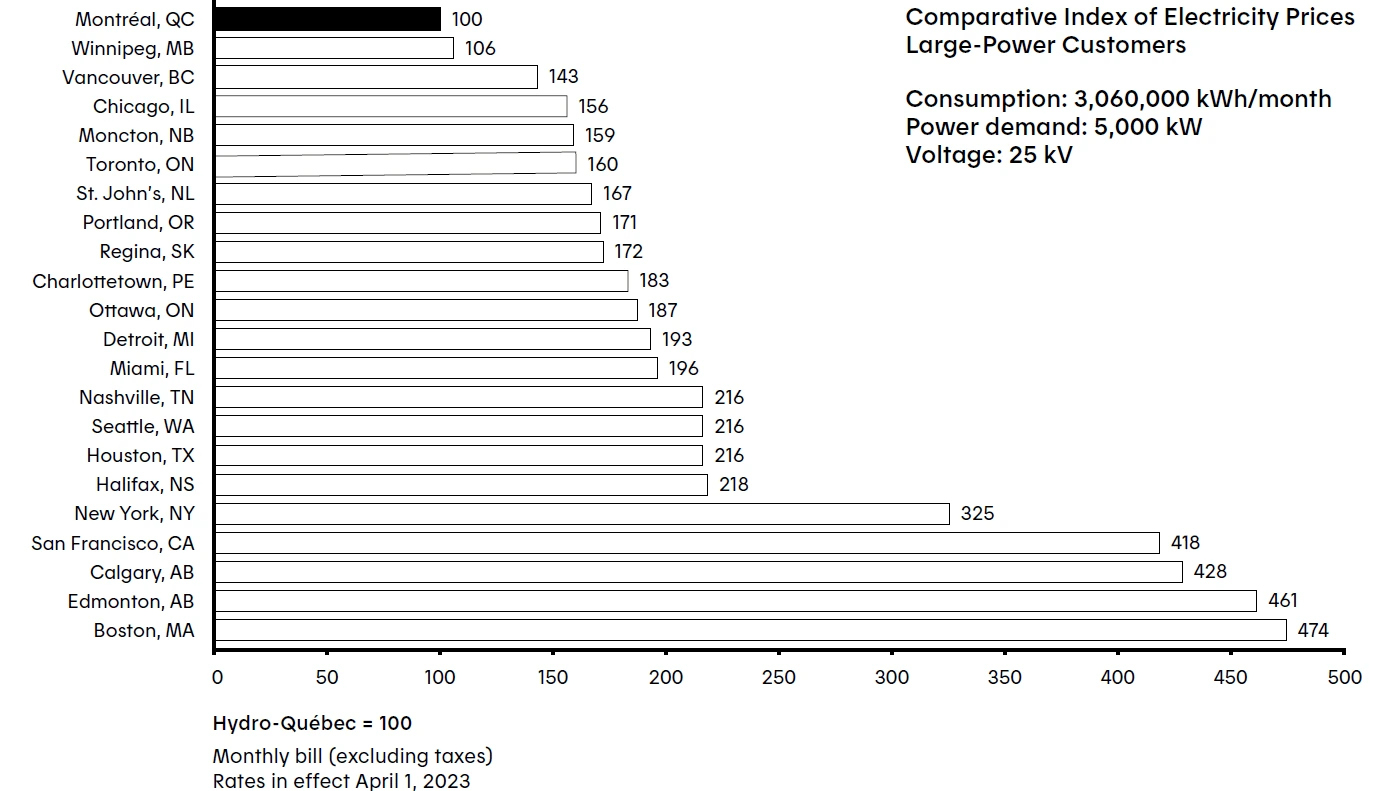
North American Electricity Rates (kWh) Large Customers
While the effort to reduce carbon emissions from traditional power generation assets is driving an increase in renewable power production from renewables, hydrogen-ready gas turbines could also play a role. See how we’re leading the charge
Decarbonization
Due to Quebec’s massive renewable hydroelectric capacity, the price per kilowatt for commercial electricity is around 5.74 cents (4 cents USD) per kilowatt-hour (kWh). This is considered relatively low compared to other major cities in the United States and Canada due to abundant hydroelectric resources. Clean renewable electricity in Canada is 78 percent less expensive than California for example, where the average price of commercial electricity is 18.18 cents per kilowatt-hour (kWh); 450% more expensive. You are paying a lot more for “dirty” energy with high carbon emissions from burring fossil fuels like coal, oil and natural gas.
Large Hydroelectric Generating Stations
Canada has the third largest installed hydro capacity in the world, behind China and Brazil. But even though Canada has the existing infrastructure to produce about 78,000 megawatts (78 GW), it has room to more than double its hydropower generation. That’s good news in a world where clean and renewable sources of energy are crucial in the fight against climate change.
Hydro-Québec’s generating fleet comprises 61 hydroelectric generating stations with a total installed capacity of 37.2 GW. Its hydropower facilities also include 28 large reservoirs with a combined storage capacity of over 176 TWh, as well as 681 dams and 91 control structures.
Daniel-Johnson Dam and Manic-5 AC Generating Station

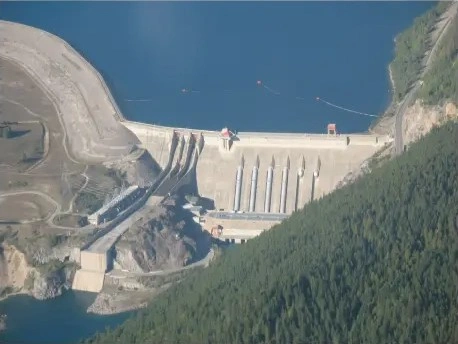
Revelstoke Dam, BC
British Columbia (B.C.) has an estimated hydroelectric capacity of 15,953 megawatts (MW). Most of this capacity is located on the Columbia and Peace rivers.